Quick facts
- Best Time
- November to April (dry, cooler season)
- Location
- Between Valladolid and Mérida, central Yucatán
- Duration
- Day trip (4-6 hours from coast)
- Getting There
- Rent a car; 2 hours from Playa del Carmen
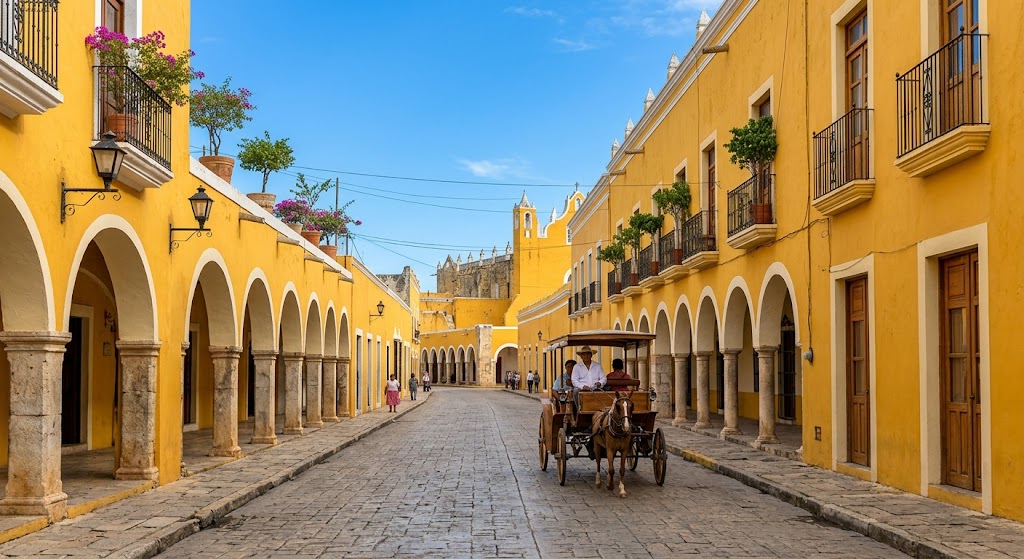
Izamal is the Yucatán's most visually striking town, a place where every colonial facade, convent wall, and narrow street has been washed in a luminous ochre yellow. Nestled between Valladolid and Mérida, this strategic crossroads deserves its own day trip, not as an afterthought but as a pilgrimage to one of Mexico's most photogenic destinations. This is quintessential visual content — the kind of place where your camera will work harder than your legs.
Why Izamal Captivates
Izamal is unlike anywhere else in the Yucatán, a town that rewards both the casual stroller and the serious photographer. The entire historic centre has been painted in a warm, honeyed yellow, creating a visual harmony that feels almost otherworldly. This wasn't always so: the yellow paint was applied in stages, beginning in the 1990s, to unify the town's appearance and boost tourism. But the result transcends marketing — it genuinely feels magical.
What makes Izamal truly special is its layering of history. Beneath the colonial streets and Spanish-built convents lie the foundations of an ancient Maya city, where pyramids once dominated the landscape. Rather than erasing this pre-Columbian past, Izamal chose to embrace it, weaving Maya archaeology and Spanish colonialism into a seamless cultural tapestry. The religious syncretism is palpable: you can taste it in the air, see it in the stonework, and feel it in the spiritual energy of the place.
The Yellow City & Colonial Heart
The immense Convent of San Antonio de Padua dominates the town's main plaza, its enormous yellow-washed walls serving as a beacon for miles around. Built in the 16th century on the ruins of a Maya temple, this convento exemplifies the Spanish conquest's architectural ambitions. Step inside to admire the baroque altarpiece, the quiet cloisters, and the sense of stillness that only centuries of prayer can create. The convent's scale was meant to impress and intimidate — a monument to European power in the New World.
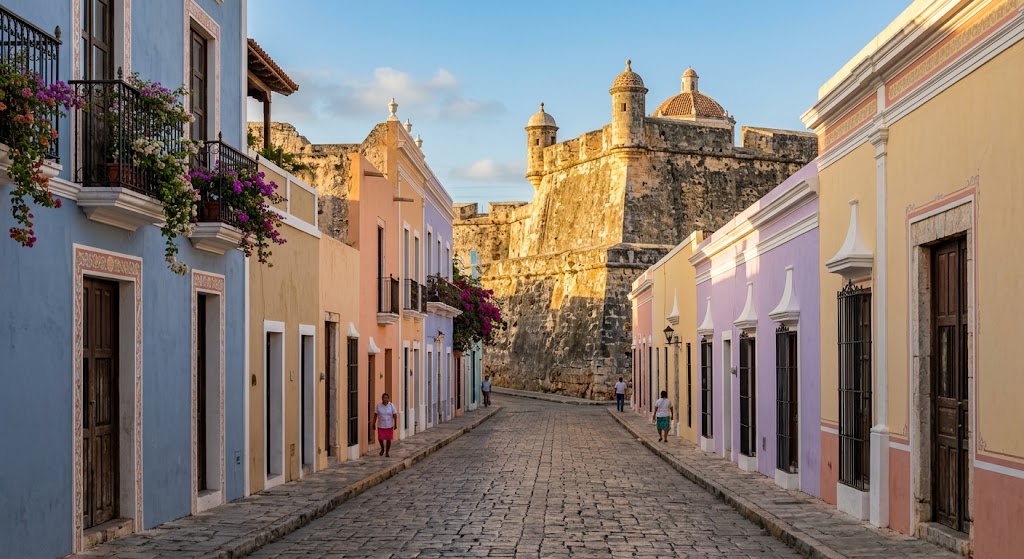
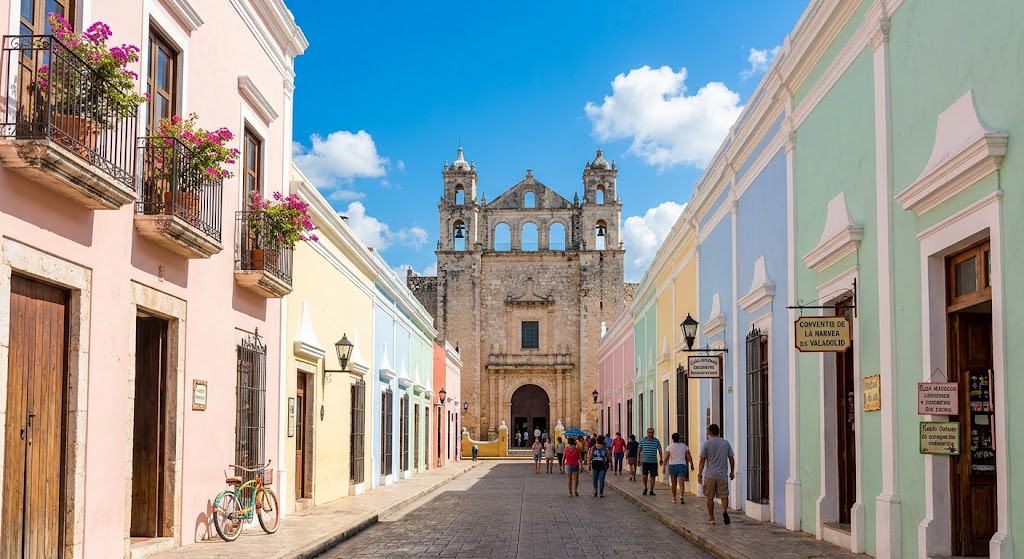
Wandering the colonial streets reveals pastel-coloured colonial mansions, their wooden doors and wrought-iron balconies preserved in meticulous detail. Many were built by wealthy landowners during the henequén boom, when the agave-fiber trade made Yucatecan elites extraordinarily rich. Today, several have been converted into small hotels, restaurants, and artisan shops. For dining, explore the central plaza's casual eateries serving Yucatecan specialities — cochinita pibil (slow-roasted pork) and fresh lime soup are local staples. The plaza itself, with its shaded trees and slow pace, invites you to sit, observe, and soak in the town's timeless rhythm.
Climbing Kinich Kak Moo Pyramid
Kinich Kak Moo is Izamal's crown jewel — one of the largest Pre-Columbian pyramids in the Yucatán, still dominates the landscape. The name translates to 'eye of the sun' in Maya, and from the summit, you understand why. The climb itself is a modest affair: broad stone steps that have been trodden for over a thousand years lead steadily upward. The views reward your effort: an unbroken panorama of yellow rooftops, the distant convento, and the flat, jungle-covered horizon stretching toward the peninsula's interior.
What makes this pyramid special, compared to larger sites like Chichén Itzá, is accessibility and scale. You can still climb it — many major Maya ruins prohibit summit access for safety reasons — and you'll do so mostly alone, without the tour groups that overwhelm more famous sites. Stand at the top and imagine the ancient Maya city that once thrived here: markets, residences, and smaller pyramids now vanished beneath centuries of vegetation and colonial construction. The sunset from Kinich Kak Moo is unforgettable, painting the yellow city gold.
Maya Ruins Meet Colonial Splendor
Izamal is a living exhibition of religious syncretism. Walk the streets and you'll spot smaller Maya ruins — pyramidal platforms, carved stones, and temple foundations — embedded within colonial architecture. The Spanish conquest didn't erase the Maya landscape; it wrote over it, layering Christianity atop ancestral sacred sites. This practice created towns that are simultaneously Spanish and Maya, colonial and pre-Columbian, Christian and spiritually connected to older, deeper roots.
For deeper archaeological context, visit the cenotes in the surrounding countryside, which fed this ancient city. Understanding Izamal's past enriches the present: you're not just admiring yellow facades, but standing in a place where two civilisations negotiated coexistence across centuries. If you're combining Izamal with a broader cultural journey, consider basing yourself in Valladolid, a charming colonial town 45 km away, or rent a car and explore the broader Yucatán cultural circuit.
Planning Your Visit
Izamal is best visited as a day trip or overnight stop between Valladolid and Mérida. The town's remote location — roughly 2 hours inland from the Riviera Maya coast — means renting a car is your best option for flexibility and comfort. Arrive early, ideally by 9 or 10 a.m., to beat the midday heat and capture photographs with softer light. The central plaza stays lively throughout the day, with locals, vendors, and visitors creating an authentic, unhurried atmosphere.
Water, sun protection, and comfortable walking shoes are essentials. Bring a camera with a wide-angle lens to capture the convent's scale and the roofscape from Kinich Kak Moo. November to April offers the most comfortable weather; May through October can be oppressively hot and humid. Entry to Kinich Kak Moo is minimal (around 50 pesos), and the convent is free to explore. Consider staying overnight if you want to attend the evening sound-and-light show projected onto the convent's facade — a relatively new addition that tells the town's history in dramatic fashion. Plan on 4 to 6 hours for a thorough visit; 2 hours is the minimum if you're passing through.
Explore Izamal at Your Own Pace
Rent a car and drive the yellow city from the coast. Discover the colonial heart and pyramid views in one unforgettable day trip.
Browse Car Rental OptionsKeep Exploring
Keep exploring: Mérida, the White City: Guide to the Cultural Capital, Puerto Morelos: Authentic Charm on the Riviera Maya and The Most Beautiful Mayan Villages to Visit in Yucatán cover more ground worth adding to your itinerary.
FAQ
How far is Izamal from the Riviera Maya beaches?
Izamal is approximately 2 hours by car from Playa del Carmen and Tulum, making it an ideal day trip or overnight stop. The drive inland offers a complete change of scenery, from beaches to colonial towns and jungles.
Can you climb the Kinich Kak Moo pyramid?
Yes, Kinich Kak Moo is one of the few major Pre-Columbian pyramids in the Yucatán where climbing is still permitted. The ascent takes about 10 to 15 minutes and rewards you with panoramic views of the yellow rooftops and surrounding landscape.
Why is Izamal painted yellow?
The town's distinctive yellow colour was applied starting in the 1990s as a unification project to boost tourism and create a cohesive visual identity. The ochre-yellow pigment was chosen to evoke the town's historic warmth and beauty, and the project has been hugely successful in making Izamal recognisable worldwide.
What's the best time to photograph Izamal?
Early morning (7 to 9 a.m.) and late afternoon (4 to 6 p.m.) offer the most flattering light, when the yellow facades glow warmly and shadows create depth. Midday sun can wash out colours. The dry season from November to April also guarantees clear skies for photography.