Quick facts
- Best Time
- November to April (dry season)
- Getting There
- 4–5 hours from Cancún or Playa del Carmen by car
- UNESCO Status
- Entire historic centre is a World Heritage site
- Main Attraction
- Walking the 17th-century city walls and ramparts
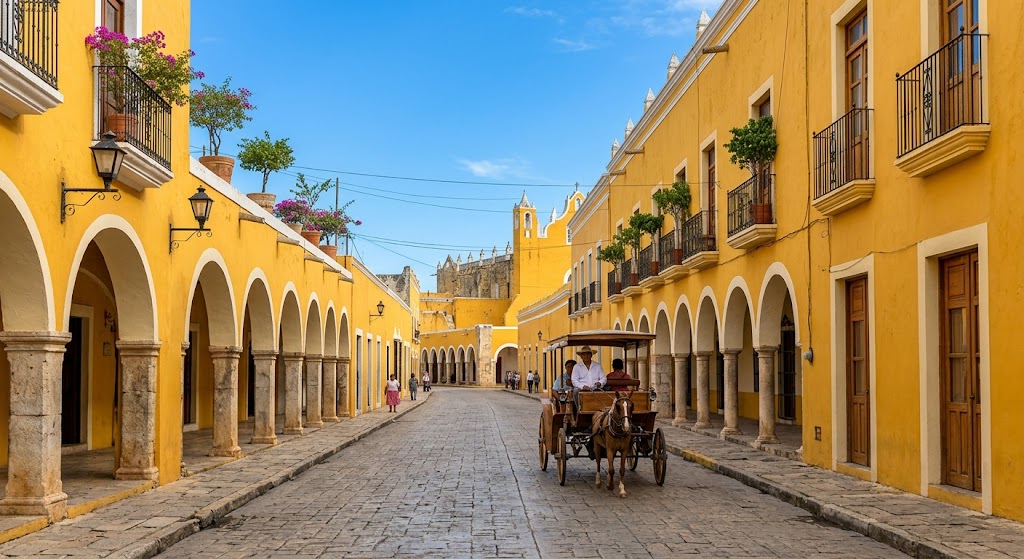
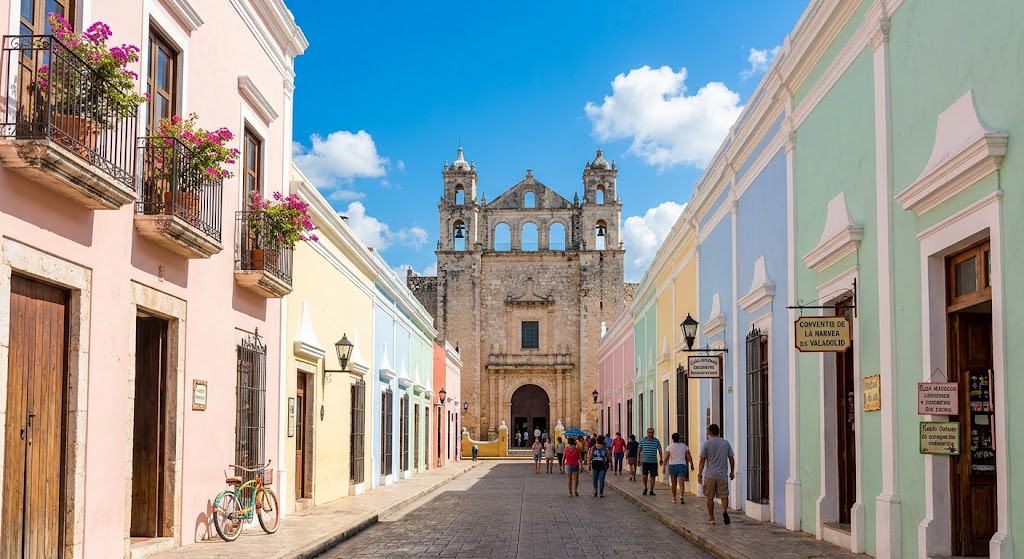
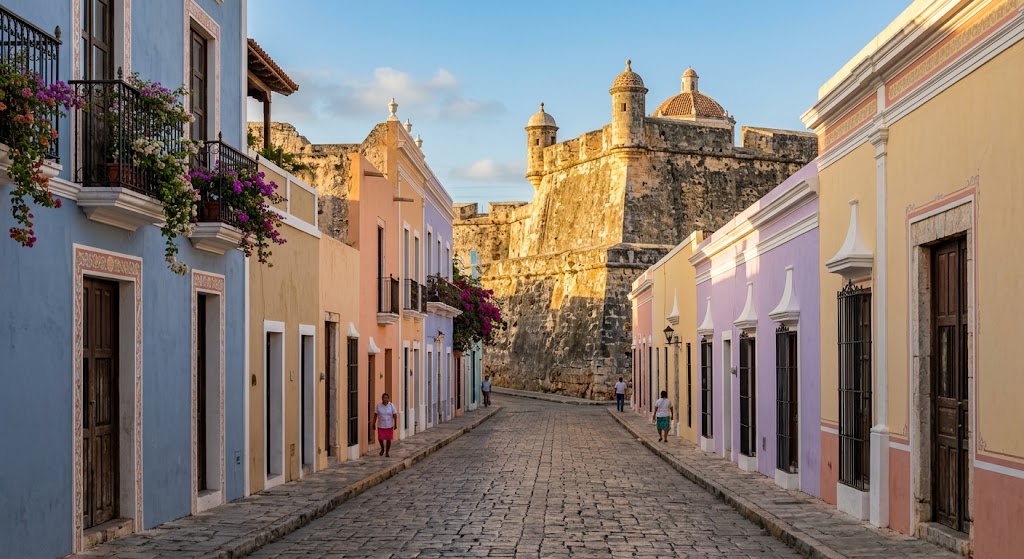
Campeche, the capital of the state bearing its name, stands as Mexico's most intact walled city and a UNESCO World Heritage site of remarkable preservation. Unlike the crowded resort towns of the Riviera Maya, Campeche offers an immersive step back into Spanish colonial times, where 17th-century stone ramparts once repelled pirates and merchant ships still bob in the Gulf. Walk the dead-straight cobbled streets lined with restored colonial mansions in pastel hues—ochre, turquoise, pink, lime—and you'll understand why travellers seeking authentic charm abandon the beach circuit for these living, breathing centuries.
This is a destination that rewards wandering: no theme parks, no cruise-ship mobs, only the salt breeze, the sound of sea birds, and the genuine warmth of a less touristy Mexican port town.
The Bastions: Campeche's Pirate Defence
The story of Campeche's walls is written in stone. In the 17th century, this coastal city became one of the most important shipping hubs in the Spanish Caribbean—and therefore one of the most coveted targets for pirates and privateers. Between the 1600s and 1700s, the city was sacked repeatedly, forcing its inhabitants to build powerful walls and eight bastions encircling the entire settlement. Today, you can walk the restored ramparts, ducking into the gun emplacements and gazing out to the Gulf as the conquistadors once did. Each bastion once housed artillery and soldiers ready to defend the colony. This two-kilometre circuit of walls is perhaps Mexico's most complete surviving example of Spanish colonial military architecture.
Visit the Baluarte de San Pedro or the Baluarte del Soledad to stand at the cannon posts. The walls remain the city's defining character, separating the historic inner town from the modern sprawl beyond—a rare privilege of genuine preservation rather than theme-park reconstruction.
Exploring the Colourful Historic Centre
Step inside the walls and enter a time capsule. Campeche's historic centre is a grid of tight cobbled streets lined with impeccably restored colonial houses, each painted in a shade you'd rarely see outside Latin America: burnt sienna next to sky blue, buttercream yellow beside deep burgundy. Many have been converted to hotels, museums, restaurants and galleries. The streets are narrow enough to offer shade in the intense heat, and wandering without a fixed itinerary is how you discover the neighbourhood's true character.
Don't miss the Catedral Metropolitana on the central plaza, a symmetrical 17th-century church with a bell tower visible from the Malecón. Inside the walls, you'll find boutique hotels and family-run comedores serving generous plates of Campechana cuisine—a local speciality mixing Spanish, Mayan and Caribbean influences. The narrow streets are safe and merchant-friendly, with small shops selling local crafts and sweets. This is where the Yucatán's slower pace becomes apparent.
Evening Strolls on the Malecón and Zócalo
As evening settles, locals and travellers gather on the Malecón, the waterfront promenade stretching the length of the old city wall. The sea breeze picks up, the light turns golden, and fishermen cast lines while families sit on benches watching the sun sink over the Gulf. This is the most authentically Caribbean experience the Yucatán offers—far removed from resort routines and selfie crowds. Street food vendors appear, selling tamales, esquites and fresh coconut water. There's a gentle, neighbourly atmosphere that speaks to Campeche's long history as a working port.
The Zócalo (main square), one block inland, offers a similar rhythm of local life without the tourist bustle. Sit beneath the ceiba trees, order a cold Modelo from a sidewalk café, and watch the afternoon dissolve into evening. This is where Campechanos gather after work, where children play, where the true heartbeat of the city still beats. When choosing where to stay in Campeche, prioritise the historic centre to be at the heart of this experience.
Getting There & Where to Stay
Campeche lies four to five hours west of Cancún or Playa del Carmen by car, making it an ideal final stop on a Yucatán road trip or a detour from the Puuc Route (which includes the ruins of Uxmal). Renting a car is the most flexible option, allowing you to explore the coast and nearby ruins at your own pace. The highway is well-maintained and safe; service stations and restaurants are frequent. First-class ADO buses also run from Cancún and Playa del Carmen, though the drive takes seven to nine hours.
The best hotels and guesthouses cluster within the walled historic centre, from budget colonial conversions to intimate boutique properties. Book ahead during the dry season (November to April) when the climate is ideal and prices rise. Campeche has none of the inflated resort pricing of the Riviera Maya—meals and rooms remain genuinely affordable, and your money goes directly to local families and businesses.
Day Trips and Nearby Exploration
While Campeche itself deserves two full days, the surrounding region rewards exploration. The ruins of Uxmal, part of the famed Puuc Route of lesser-known archaeological sites, lies just 90 minutes away—an excellent pairing if you're interested in Mayan temples and ruins with fewer crowds than Chichén Itzá. Calakmul, one of the most remote and spectacular Maya cities, sits four to five hours south near the Guatemalan border, a challenging but rewarding expedition through pristine jungle.
Closer to Campeche itself, explore the mangrove estuaries and fishing villages along the coast, or hire a local guide to visit cenotes in the surrounding limestone plain. The Yucatán's interior, often overlooked by coastal itineraries, reveals itself fully from Campeche's advantageous position—a place where history, architecture and authentic Mexican life converge without compromise.
Ready to Discover Colonial Mexico?
Find authentic colonial hotels, guesthouses and intimate accommodations in Campeche's walled historic centre.
Explore Where to Stay in CampecheKeep Exploring
FAQ
How long should I spend in Campeche?
Two full days is ideal to walk the walls, explore the historic centre, enjoy the Malecón at sunset and soak in the local atmosphere. A single overnight allows a rushed visit; three days gives you time for nearby ruins like Uxmal.
Is Campeche safe for tourists?
Yes. Campeche is one of the safest tourist destinations in Mexico. The historic centre is compact, well-lit in the evenings and frequented by locals and travellers. Exercise standard travel caution, but fear is not warranted.
What is the best time to visit Campeche?
November to April offers ideal weather—temperatures around 28–30 degrees Celsius with lower humidity. This is high season, so book accommodation ahead. May to October is hot and humid (above 35 degrees felt temperature) with occasional rain; visitor numbers drop and prices fall.
Can I combine Campeche with other Yucatán destinations?
Absolutely. Campeche pairs perfectly with the Puuc Route ruins (Uxmal, Kabah) to the east, or as the final stop on a 15-day peninsula road trip. It's four to five hours from Playa del Carmen and Cancún, or a scenic inland detour from the Riviera Maya.