Quick facts
- Best for
- Adventure seekers fleeing crowds
- Top destinations
- El Cuyo, Punta Sur, Ek Balam, Río Bec
- Getting there
- Rent a car; remote sites require high-clearance vehicles
- Best season
- November to April (dry, clear skies for exploring)
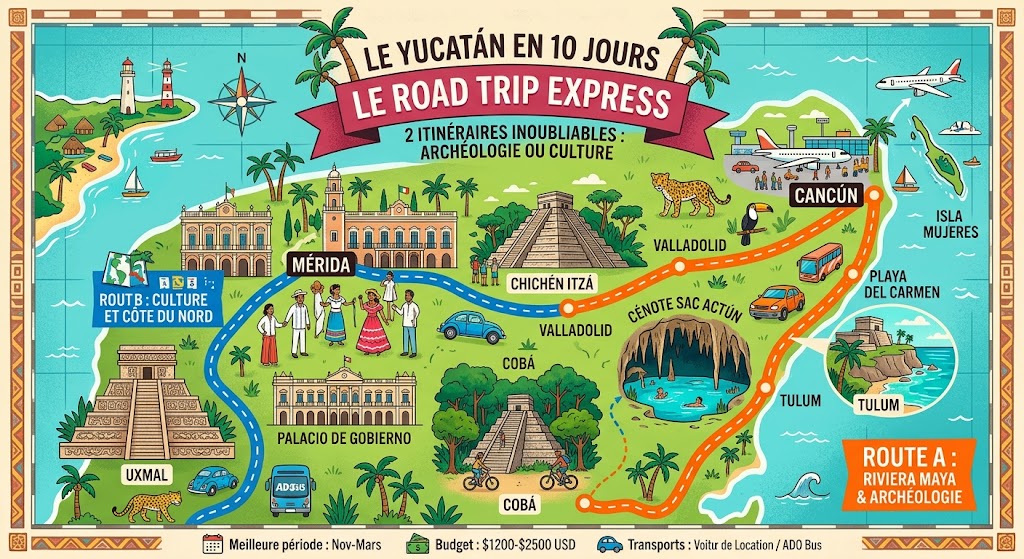
The Yucatán Peninsula draws millions to its polished resorts, but beyond the Riviera Maya lies a realm of genuine discovery. Here, village fishermen still set sail at dawn, cenotes echo with the calls of unseen birds, and Maya structures stand in solitude beneath a forest canopy. This guide uncovers the peninsula's most protected and least commercialised destinations—places that preserve the spirit of authentic travel and require renting a car to reach remote spots. Whether you seek windswept northern beaches, wild jungle reserves, or climbable pyramid peaks, the road less travelled rewards those who venture beyond the glossy tourist circuit.
El Cuyo: The Last Paradise
On the raw north coast lies El Cuyo, a preserved fishing village where kitesurfing meets authentic Caribbean simplicity. Unlike neighbouring Holbox—now flooded with beach clubs and Instagram crowds—El Cuyo remains a frontier of genuine travel, with no loud venues or major infrastructure. The village comes alive between February and May, when world-class kite wind rolls across extraordinarily shallow, clear water, making it ideal for learning. Non-kiteboarders find kilometres of completely deserted beaches to wander, quad-rental shops to explore the coastline, and local seafood restaurants like La Conchita and Naia Café serving fresh catches at modest prices. The village's authenticity is its greatest asset: minimal development, minimal crowds, maximal peace.
Getting to El Cuyo requires commitment—it sits roughly 120 km north of the mainland highway—but that isolation is precisely why it has escaped over-development. A robust four-wheel-drive vehicle is recommended, and a high-clearance car essential, especially in the rainy season. Once arrived, you'll understand why this coast remains the world's last true kitesurf sanctuary, preserved by remoteness and the devotion of a small community bent on protecting their home.
Punta Sur Cozumel: Wild Cliffs & Reserves
Across the channel from Playa del Carmen lies Cozumel, famous for world-class reefs and diving. Yet most visitors cling to the western shore. The eastern coast and Punta Sur reserve remain a wild frontier of dramatic limestone cliffs, wind-battered beaches and mangrove sanctuary. Here, the island reveals its untamed character—pristine waters, offshore rock formations and a lighthouse standing watch over the turbulent Caribbean. The ecosystem thrives with sea turtles, rays and tropical fish in waters so clear they seem liquid air. Marine life excursions from Punta Sur reach sanctuaries few tourists ever witness.
To experience this reserve, rent a car or scooter upon ferry arrival (roughly 28 euros per person without a vehicle). Driving the eastern circuit takes a full day, rewarding patience with solitude and geological drama. The reserve entrance fee is modest, and the reward—empty beaches framed by jungle and limestone—is priceless. Arrive early to maximise your time before the afternoon wind picks up, turning the coast into a churning seascape that speaks to the power of untamed nature.
Cenote Networks: Homún & Cuzamá
West of the Riviera Maya, inland from Mérida, lies a network of cenotes few tourists discover. The villages of Homún and Cuzamá are gateways to underground lakes and caverns where authenticity reigns. Cuzamá is famed for its unique 'trucks'—small mule-drawn carts running on restored henequén-era railway tracks, a legacy of the region's 'green gold' plantation era. These carts creak and sway as they haul visitors across flat scrubland to isolated cenotes like Chelentún and Bolom-Chojol, creating an experience that feels suspended in time. The journey itself is the adventure; few tourists undertake it, and fewer still appreciate its ethnographic richness.
In Homún, seek out Cenote Santa Maria, a remarkable underground cavity run by a local family that grants access to the water via a steep rope ladder into pitch darkness—then daylight floods through a single overhead opening, illuminating the cavern with an almost mystical glow. Nearby cenotes like Tza Ujun Kat and Santa Barbara offer similar off-grid experiences. Cenotes guide links to fuller information; here, it suffices to say that these networks represent genuine archaeology of daily village life, not manicured monuments. Plan a day trip from where to stay in Mérida, rent a high-clearance car, and experience cenote culture as it existed before tourism.
Remote Archaeology: Ek Balam & Río Bec
For Mayan temples seekers willing to venture beyond Chichén Itzá, two sites stand apart. Ek Balam, near Valladolid, allows visitors to climb the tall, steep steps of its impressive central Acropolis—a privilege denied at most major sites. From the summit, you gaze over an endless forest stretching toward the horizon across the flat Yucatán, with stucco sculptures adorning the facades still remarkably preserved. The site remains less visited than nearby Coba or Tulum, offering solitude and genuine discovery. The day can easily extend to nearby Cenote X'Canché, hidden in jungle minutes away by bike or foot.
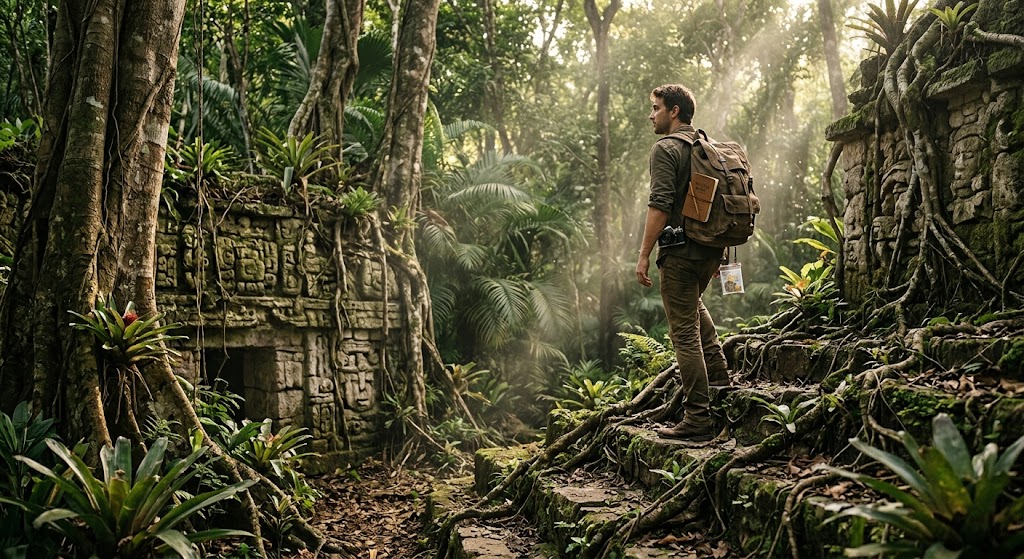
Further south lies Río Bec, among Mexico's most remote archaeological zones, reached only by rough 4x4 track through dense jungle. This site showcases the Río Bec architectural style: twin towers with faux temple facades and labyrinthine layouts that confound modern visitors. Few tourists reach here; the remoteness is absolute. Río Bec offers a glimpse into how archaeology felt before smartphones and entry fees—a solitary exploration of human mystery reclaimed by forest and time. Both sites demand renting a car, patience and a spirit of genuine adventure, but reward those who make the journey with memories no guidebook can replicate.
Practical Tips for Off-the-Beaten-Path Travel
Venturing into remote Yucatán requires planning. Always use a high-clearance vehicle—standard rentals will fail on unmaintained tracks. Fill your fuel tank before leaving main highways; petrol stations vanish on remote roads. Download offline maps and carry printed backups; GPS signals can be unreliable in jungle. Bring water, snacks and a basic first-aid kit. Inform your hotel or a contact person of your intended route and return time. Roads deteriorate rapidly in rainy season (May–October); November to April offers the safest, most predictable driving conditions.
Unlike major archaeological sites, remote destinations often lack admission staff or fixed hours. Call ahead to confirm access. Many cenotes are family-run; a small donation (50–200 pesos) shows respect and supports local livelihoods. Pack reef-safe sunscreen; these fragile ecosystems are increasingly protected. Finally, embrace slow travel: off-the-beaten-path rewards those who linger, observe and engage with local communities rather than chasing destinations. The goal is not a checklist but genuine connection with a landscape and people shaped by centuries of history and isolation.
Ready to Leave the Crowds Behind?
A rental car is your passport to remote beaches, hidden cenotes, and climbable pyramid peaks.
Find Your Rental CarKeep Exploring
FAQ
Is it safe to drive to El Cuyo or Río Bec alone?
Yes, if you follow basic precautions. The Yucatán is the safest region in Mexico. Inform someone of your route, drive during daylight hours, carry offline maps, and avoid driving at night on remote roads. A high-clearance vehicle is essential. The journey is challenging but not dangerous.
What is the best time of year to visit these off-the-beaten-path sites?
November to April offers the best conditions: dry weather, lower humidity, clear skies for photography, and passable roads. The rainy season (May–October) brings oppressive heat, reduced visibility, and deteriorating road conditions, especially on unmaintained tracks.
Do I need a 4x4 vehicle to reach Río Bec or other remote sites?
For Río Bec and the most isolated cenotes, a high-clearance 4x4 is strongly recommended; in wet season, it may be essential. For El Cuyo and cenotes around Homún, a standard rental car may suffice if roads are dry, but high-clearance is safer. Always confirm road conditions before booking.
Are there restaurants, petrol, or ATMs at these remote destinations?
Infrastructure is minimal. El Cuyo has basic restaurants and a petrol station; Homún and Cuzamá have humble eateries but limited services. Río Bec has none. Always arrive with a full fuel tank, cash (ATMs are rare), snacks, and water. Stock supplies in larger towns before venturing out.