Quick facts
- Best time
- November–April (dry season, 28–30°C)
- Duration
- 15 days self-drive
- Starting point
- Cancún or Playa del Carmen
- Best transport
- Car rental (fluidity and freedom)
The Yucatán Peninsula rewards self-directed exploration. This 15-day loop starts and ends in either Cancún or Playa del Carmen, sweeping inland to cenotes and colonial cities before crossing the peninsula to lagoons, ruins, and Caribbean islands. A rental car makes the route fluid, allowing you to navigate between stops at your own pace—no rushed tours, no crowded group buses.
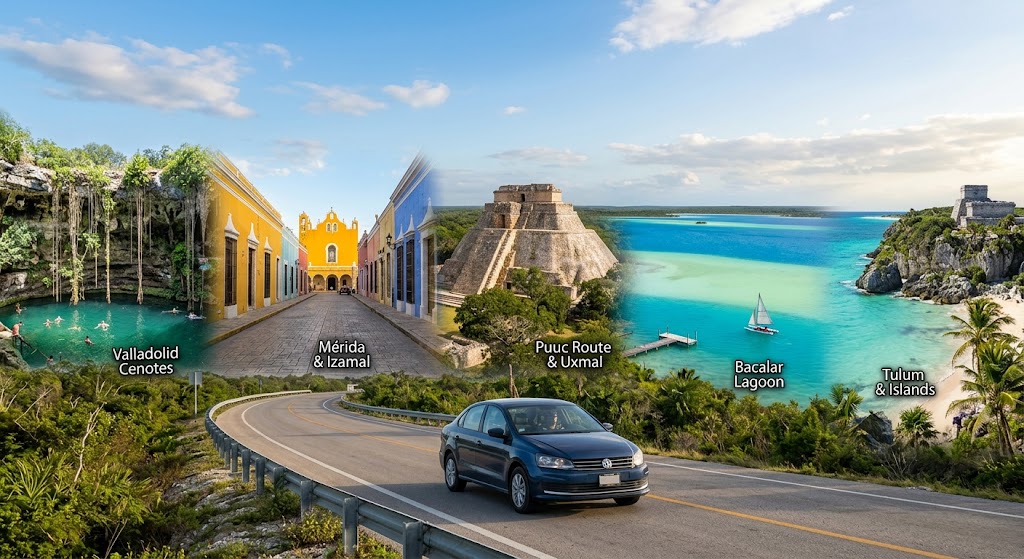
Renting a vehicle unlocks the real heartland: hidden cenotes around Valladolid, the yellow streets of Izamal, the austere architecture of the Puuc Route, and the turquoise shallows of Bacalar. This itinerary balances archaeology, nature, and culture with strategic rest days to avoid burnout.
Valladolid & Cenotes (Days 1–2)
From Cancún airport, drive inland 160 km to Valladolid (about 2.5 hours). This colonial pueblo mágico sits at the heart of Mexico's cenote country. Stay two nights here and dedicate a full day to exploring the cenotes dotting the surroundings—Zací within town itself, the vine-draped Hacienda San Lorenzo Oxman famous for cliff-jumping, and the cavern systems of X'keken and Samulá (entry around 120 pesos). Cenote X'Canché lies a short bike ride away; rent one at your hotel. Stroll the peaceful main plaza, taste Yucatecan cochinita pibil for lunch, and watch the evening video-mapping light show on the Convent of San Bernardino.
Morning drives between cenotes take 20–40 minutes. This pace allows you to swim, explore villages, and rest without fatigue setting in.
Mérida & Izamal (Days 3–5)
Drive southwest to Mérida (160 km, 2 hours). The White City earns its name and cultural capital status. Spend a full day wandering the Plaza Grande, entering the Palacio de Gobierno to see Fernando Castro Pacheco's history murals, visiting the San Ildefonso Cathedral, and strolling the shaded Paseo de Montejo lined with henequén-baron mansions. The Gran Museo del Mundo Maya (entry 60 pesos) clarifies pre-Columbian history. Stay two nights; restaurants and hotels offer excellent value here.
On day five, drive 70 km east to Izamal (1.5 hours), a photographic dream. Every facade in the historic centre glows burnt-yellow, framing the colossal yellow Convent of San Antonio de Padua and the Maya pyramid Kinich Kak Moo. Climb to the pyramid top for views of the golden rooftops stretching to the horizon. Overnight here or return to Mérida.
The Puuc Route & Campeche (Days 6–7)
Drive south toward Campeche (200 km, 3 hours), making a strategic stop at Uxmal, the crown jewel of the Puuc Route. This site offers serenity absent from Chichén Itzá crowds. Admire the geometric facades, the omnipresent masks of Chaac the rain god, and the quadrangular courtyards. The nearby Choco Story museum opposite the ruins pairs perfectly with family itineraries. Continue to Campeche, the only walled Caribbean city in Mexico. Its UNESCO-listed centre features dead-straight colonial streets, pirate-era bastions, and a peaceful Malecón promenade. Wander freely, unrushed, and savour authentic Yucatecan cuisine without the Playa del Carmen surcharge.
Bacalar Lagoon (Days 8–10)
Cross inland southeast to Bacalar lagoon (320 km from Campeche, 4.5 hours). This lagoon of crystalline water in seven shades of blue feels like another planet. Stay three nights and devote time to non-motorised sailboat tours through Pirates' Channel, a responsible alternative to speedboat excursions that preserves the lagoon's ecology. Swim at Los Rápidos, where a gentle current carries you through an ethereal landscape. Bacalar's shallow, calm waters are ideal for families and swimmers wary of open ocean. Hike the small mangrove trails, kayak at sunset, and simply rest—this is the trip's spiritual centre, perfect for decompression before the final push.
Tulum & Island Finale (Days 11–15)
Head north to Tulum (360 km, 5 hours), arriving day 11. Explore the clifftop ruins—a fortified ancient port where iguanas bask on stone temples overlooking turquoise Caribbean. Spend a night here, then visit nearby cenotes like Nicte-Ha or Taak Bi Ha, or snorkel at Akumal to swim with sea turtles responsibly. On day 13, drive north to either Holbox or Isla Mujeres, your final destination. Holbox—car-free and bohemian—offers bioluminescent night kayaking (250+ pesos) and white sandbars. Isla Mujeres provides snorkelling, the Mesoamerican Reef, and beach clubs. Return to Cancún or Playa del Carmen on day 15, refreshed and transformed.
Ready to Drive?
Rent a car and experience the Yucatán at your own pace. Book transparent, hassle-free.
Find Your Rental CarKeep Exploring
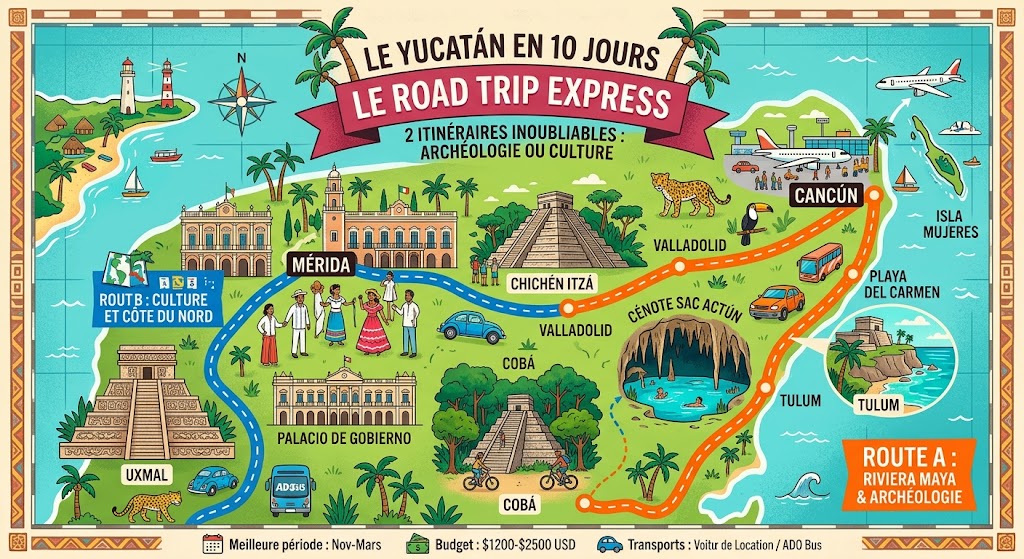
If you're still planning this part of the trip, these guides pair well with it: Yucatán Road Trip: The Ultimate 10-Day Itinerary, The Yucatán with Kids: Family Itinerary & Practical Tips and The Yucatán in 10 Days: The Express Road Trip.
FAQ
Is a rental car necessary for this itinerary?
Yes. This loop covers 2,000+ km and requires flexibility to visit remote cenotes, archaeological sites, and lagoons. <a href='/car-rental'>A rental car</a> gives you the freedom to linger where you wish and avoid fixed tour schedules. First-class ADO buses link major cities but don't serve cenotes or smaller towns.
What is the best time to drive this route?
November through April offers the ideal climate: temperatures between 28–30°C, low humidity, and minimal rain. August–October bring oppressive heat (feels like 35°C+) and hurricane risk. November and February are the sweet spots—perfect weather, excellent underwater visibility, and moderate tourist crowds.
How much does a 15-day road trip cost?
A couple seeking comfort should budget 2,800–5,000 euros total (flights, car, hotels, meals). Car rental costs roughly 30–50 euros per day. Meals range from 3–5 euros (street food) to 20 euros (nice dinner). Archaeological entries run 25–30 euros each; guided excursions (cenote diving, Sian Ka'an tours) cost 70–230 euros.
Are there specific safety concerns on this route?
The Yucatán is Mexico's safest region. Watch for unmarked 'topes' (steep speed bumps) on highways and expect random police checks. Avoid driving at night. Book accommodation in advance during high season (January–March). Use standard travel precautions in cities.