Quick facts
- Best time to visit
- November to March (dry season, moderate crowds)
- Entry cost
- Around 200-250 pesos, plus Choco Story museum separately
- Getting there
- Rent a car to drive the Puuc Route between Mérida and Campeche
- Duration
- Half-day to full-day excursion from nearby towns
Uxmal, nestled on the famous Puuc Route between Mérida and Campeche, stands as one of Mexico's most architecturally refined Maya sites. Unlike the monumental grandeur of Chichén Itzá, Uxmal captivates visitors with the delicate intricacy of its stonework and the serene, contemplative atmosphere that pervades its grounds. This is a destination for those seeking genuine immersion in pre-Columbian history without the overwhelming crowds.
The site belongs to the Puuc civilization, a distinctive regional tradition that flourished between 750 and 1000 CE. The Puuc culture left an indelible mark on Yucatan architecture, and Uxmal remains its crown jewel, a place where every carved facade tells stories of an ancient society in constant conversation with the rain gods.
Puuc Architecture: What Makes It Special
The Puuc civilization developed a distinctive architectural language that sets it apart from other Maya traditions. Walk through Uxmal and you will notice immediately the hallmark features: richly carved facades adorned with complex geometric motifs, intricate latticework, and the omnipresent masks of Chaac, the rain god. This deity appears again and again across the site, a testament to the region's dependence on seasonal rainfall in a landscape where cenotes were scarce.
The architects of Uxmal employed a sophisticated system of corbel arches and precise stone-fitting techniques. Unlike earlier Maya structures that relied on monumental scale, Puuc artisans pursued elegance through decoration. The facades shimmer with detail: repeating patterns, interlocking designs, and sculptural elements that transform buildings into visual symphonies.
For an in-depth understanding of this civilization, pair your site visit with the cultural immersion experiences offered nearby. This context transforms a casual tour into a journey through genuine historical understanding.
Exploring the Uxmal Site
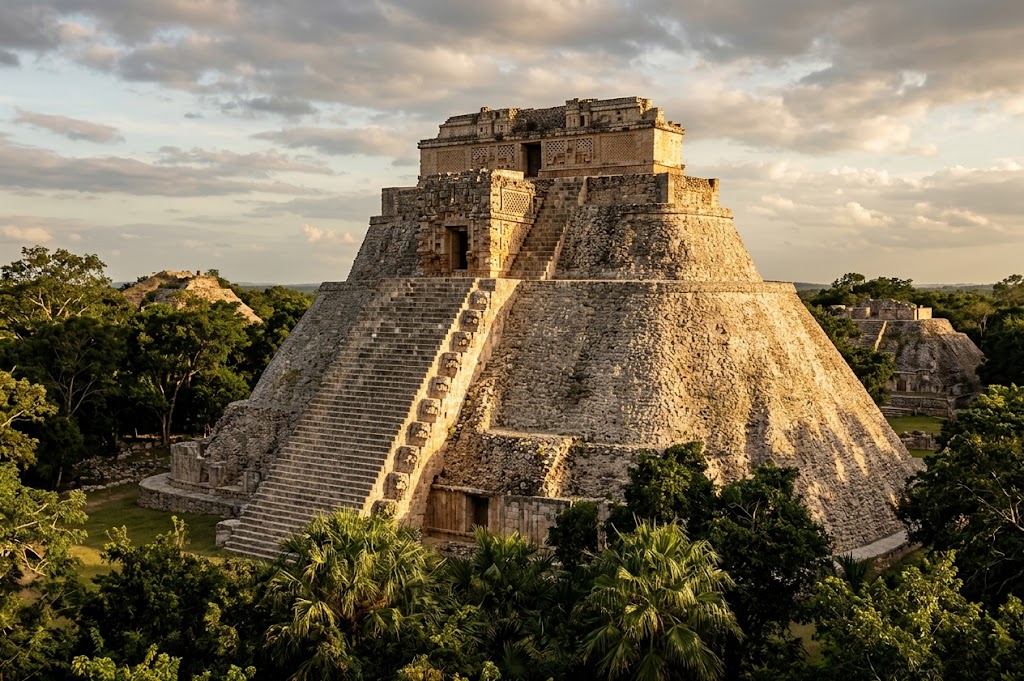
The Uxmal archaeological zone unfolds as a series of interconnected plazas, each revealing new architectural treasures. Begin at the Pyramid of the Magician (Pirámide del Adivino), an unusual elliptical structure that rises steeply from the plaza floor. Unlike the symmetrical pyramids elsewhere in Mesoamerica, this 35-metre-high monument presents a striking profile that has mystified archaeologists for centuries.
Continue to the Quadrangle of the Nuns (Cuadrángulo de las Monjas), an expanse surrounded by four buildings whose facades showcase the full vocabulary of Puuc design. Each wall bristles with geometric patterns and Chaac masks that seem to regard visitors with an eternal, watchful gaze. The House of the Turtles and the House of the Pigeons complete the major structures, each deserving an extended pause to absorb the sculptural details.
Consider staying in a nearby colonial town to explore Uxmal at a leisurely pace, allowing early-morning visits before the heat builds and few other visitors roam the plazas.
The Choco Story Museum
Directly opposite the Uxmal ruins sits the Choco Story museum, a clever and playful complement to the archaeological site. This interactive museum traces the history and cultural significance of chocolate (or 'xocolatl' in Nahuatl) from pre-Columbian times through colonial and modern eras. The experience includes tastings, demonstrations of traditional Maya chocolate preparation methods, and hands-on activities that appeal especially to families.
The combination of Uxmal's serious historical weight and Choco Story's lighter, sensory engagement creates an ideal full-day itinerary. Visit the ruins in the morning, exploring the plazas and absorbing the architectural grandeur, then spend the afternoon in the museum, where children and adults alike can relax, learn, and indulge in chocolate. This pairing breaks up the intensity of pure archaeology and offers a rounded cultural experience.
Practical Tips for Your Visit
Arrive at Uxmal as early as possible—ideally at opening—to enjoy the site in cooler temperatures and with minimal crowds. The morning light also bathes the carved facades in soft, revealing angles that make photography rewarding. Bring plenty of water, wear a wide-brimmed hat, and apply sunscreen generously. The site offers little shade, and the Yucatan sun is fierce year-round.
The dry season, from November to March, provides the most comfortable visiting conditions with temperatures around 28 to 30 degrees Celsius and lower humidity. March through October brings oppressive heat and the rainy season, though the site remains open. Explore other nearby temples as part of a broader archaeological circuit, and rent a car to visit Uxmal and the wider Puuc Route at your own pace, stopping at lesser-known sites and villages along the way.
Entry fees hover around 200 to 250 pesos, plus additional costs for Choco Story if you choose to visit. Consider hiring a guide at the entrance for deeper historical context—their knowledge transforms casual observation into genuine understanding.
Beyond Uxmal: The Broader Puuc Route
While Uxmal is the star, the Puuc Route stretches across a region dotted with smaller but equally fascinating archaeological sites. Kabah, about 30 km south, features the remarkable Codz Poop palace with its facade cascading with Chaac masks. Sayil boasts a three-storey building rarely seen in Maya architecture, while Labná offers a graceful arch that once connected two plazas. These sites receive far fewer visitors than Uxmal, making them perfect for travellers seeking solitude and authenticity.
The drive between Mérida and Campeche passes through this archaeological corridor, and renting a car allows you to stop at whim, explore jungle paths, and interact with local communities. Small villages like Oxkutzcab offer excellent local restaurants serving regional Yucatecan cuisine. This is slow travel at its best—a journey through time and landscape woven together seamlessly.
Ready to Explore the Puuc Route?
Rent a car and drive at your own pace through Yucatan's architectural heartland.
Find Your Perfect Car RentalKeep Exploring
Planning around this? You'll also want to read Calakmul: Visiting the Maya City Lost in the Jungle, Chichén Itzá Travel Guide: Tips, History & How to Visit and Chichén Itzá: Tips for a Crowd-Free Visit.
FAQ
Is Uxmal worth visiting if I'm also going to Chichén Itzá?
Absolutely. While Chichén Itzá impresses with scale and fame, Uxmal rewards visitors with intricate artistry and a peaceful, crowd-free atmosphere. The two sites represent different Maya civilizations and architectural philosophies, so visiting both offers a richer understanding of pre-Columbian Yucatan.
How long does it take to explore Uxmal?
Plan for 2 to 3 hours to walk the major structures and absorb the architectural details. A guided tour typically takes 2.5 to 3 hours. If you add the Choco Story museum, allocate a full 5 to 6 hours for a complete experience.
What is the best time of day to visit?
Arrive at opening (usually 8 a.m.) to enjoy the coolest temperatures, softest light, and fewest visitors. The morning is ideal for photography, as the sun illuminates the carved facades at favourable angles.
Can I visit multiple Puuc Route sites in one day?
Yes, absolutely. Renting a car allows you to visit Uxmal, Kabah, Sayil, and Labná in a single day, though you will need to start early and move quickly. Alternatively, dedicate a full day to Uxmal and the Choco Story, then explore other sites the following day.