Quick facts
- Best Season for Celestún
- September to February (mating season)
- Best Season for Río Lagartos
- April to September (nesting and chick-rearing)
- Boat Cost
- Around 1,200 pesos per lancha (split between passengers)
- Getting There
- Rent a car; both reserves are inland estuary destinations
The Yucatán Peninsula hosts Mexico's two most spectacular flamingo reserves, separated not by distance but by season and behaviour. Celestún, west of Mérida, dominates from autumn through winter when vast breeding colonies converge to mate and raise chicks. Río Lagartos, on the north coast, transforms into a nursery from spring through late summer. Understanding these cyclical migrations transforms a generic birdwatching trip into a truly unforgettable encounter with nature.
Both reserves demand a car rental to reach their remote estuaries and mangrove channels. The choice between them hinges entirely on your travel dates and appetite for adventure.
Celestún: Winter Mating Grounds
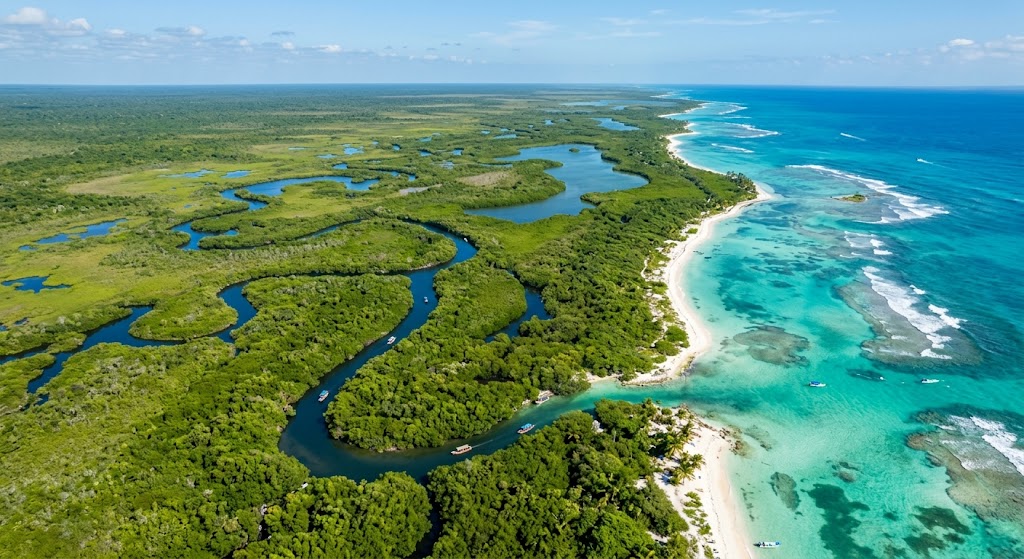
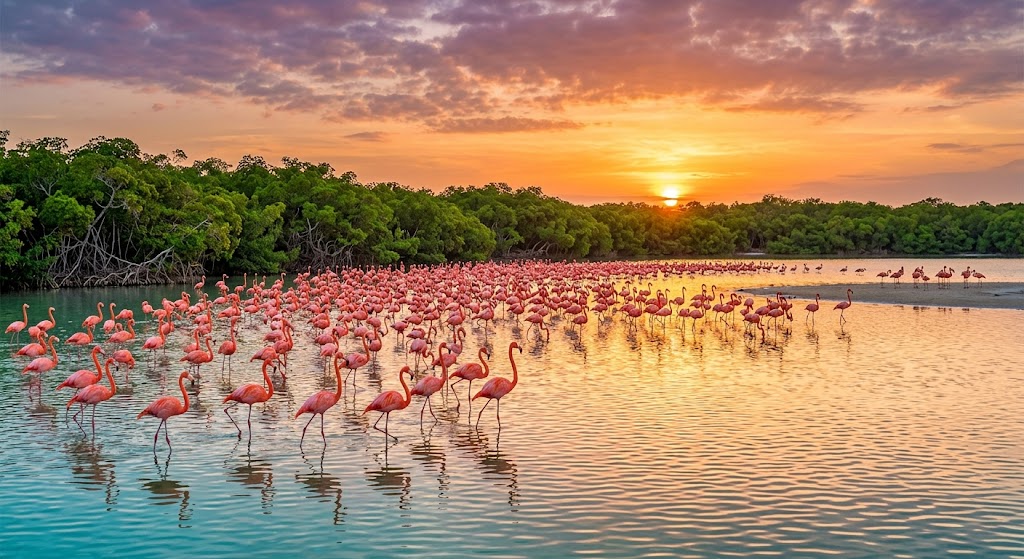
From September through February, Celestún becomes the undisputed flamingo capital of the Mexican Caribbean. Huge colonies favour this sprawling estuary west of Mérida to mate and care for their young, arriving to exploit the nutrient-rich brackish waters that sustain their pink plumage. The waters teem with algae and crustaceans that flamingos filter-feed on, lending their feathers the iconic rosy hue.
Reaching the birds requires renting a lancha (traditional wooden motorboat) that costs approximately 1,200 pesos to split among passengers. Your guide navigates narrow mangrove-lined channels where hundreds of pink silhouettes gather in the distance. The experience is peaceful, intimate and utterly hypnotic. Visit the best hotels in the region to base yourself nearby and avoid long drives.
Río Lagartos: Spring & Summer Nesting
In March and April, the flamingo colonies begin their remarkable migration north to Río Lagartos on the peninsula's northern tip, where conditions favour egg-laying and chick-rearing from April through September. This shift responds to ancient rhythms: as water conditions change and food sources shift, the birds abandon Celestún for new breeding grounds.
The Río Lagartos boat journey frequently includes a detour to Las Coloradas, a striking pink lagoon whose vivid colour mirrors the flamingos themselves. This is where sea salt is harvested, and the crystalline pink hue derives from mineral and algae concentrations. A single excursion delivers both the seabirds and one of Mexico's most photogenic natural phenomena.
Understanding the Migration Pattern
Flamingos are nomadic by necessity, not whim. The vast colonies that paint Celestún pink each winter vacate en masse around March and April, driven by reproductive instinct and environmental shifts. The journey north to Río Lagartos represents one of nature's grand coordinated movements: thousands of birds rising together, wings beating in synchronised flight across the Yucatán sky.
This pattern repeats annually with remarkable precision. By April, the southern reserve sits relatively quiet while Río Lagartos pulses with nesting activity and the chaos of new chicks. By August and September, as the chicks fledge and mature, the birds begin their southern return to Celestún, where the cycle begins anew. Timing your visit to this rhythm transforms a casual birding trip into a front-row seat to one of nature's most elaborate survival strategies.
How to Plan & What to Expect
Choose Celestún if your trip falls between September and February. Choose Río Lagartos if you are visiting from April through August. Both destinations demand early mornings (boats depart by 7 or 8 a.m.) when flamingo activity peaks and light is ideal for photography.
Bring sun protection: wide-brimmed hats, high-SPF sunscreen and polarised sunglasses are essentials on the water. The boat journey typically lasts two to three hours. Expect to see hundreds of flamingos, but do not anticipate close encounters—these are wild birds, and approach distances are maintained by your guide. Consider pairing your visit with nearby cenote exploration or a day trip to a Mayan temple to craft a fuller itinerary around the reserve visit.
Practical Tips for Both Reserves
Book your lancha through your hotel, a tour operator or directly at the reserve entrance. The 1,200-peso cost typically includes the boat, a naturalist guide and sometimes a simple lunch. Bring binoculars, a camera with a good zoom lens, and a notebook—many visitors keep sighting journals to document the experience. Wear neutral clothing in earth tones to avoid startling the birds.
The Yucatán is generally safe, and these reserves are among Mexico's most tranquil destinations. If you prefer not to rent a car, first-class ADO buses connect Mérida to Celestún, though schedules are limited. For Río Lagartos, a rental vehicle offers more flexibility. Respect the mangrove ecosystem: pack out all rubbish, use only biodegradable products and follow your guide's instruction about photography and behaviour near nesting sites.
Ready to rent a car and chase the flamingos?
Navigate the peninsula's estuary routes safely with our transparent car-rental guide—no hidden deposits, no surprise fees.
Explore car-rental optionsKeep Exploring
Want to go deeper? Check out Laguna de Yalahau: The Secret Oasis of Isla Holbox, Wildlife of the Maya Jungle: Watching the Animals and Sian Ka’an Biosphere Reserve: A Nature Lover’s Paradise next.
FAQ
Which reserve should I visit if I'm traveling in June?
Visit Río Lagartos. The colonies have migrated north by April, and June offers warm weather, nesting activity and plenty of hungry chicks. Celestún will be relatively quiet at this time.
How much does a flamingo-watching boat tour cost?
A typical lancha costs around 1,200 pesos, which is usually split among passengers (so 300-400 pesos per person in a group of 3-4). The price often includes the boat, guide and sometimes lunch.
Can I visit both reserves in one trip?
Yes, if your dates span the March-April transition period when both reserves host flamingos. Otherwise, choose based on your travel month. Each reserve deserves a full day of exploration.
What else can I see at these reserves besides flamingos?
Expect herons, egrets, cormorants and ospreys. Río Lagartos includes a stop at the dramatic pink Las Coloradas lagoon. Both reserves showcase pristine mangrove ecosystems and offer glimpses of crocodiles in the waterways.