Quick facts
- Best Time
- November to April (dry season, calm waters)
- Duration
- Full-day excursions (6–8 hours)
- Cost
- 180–230 euros per person, all-inclusive
- Main Activity
- Guided boating, snorkeling, and archaeology
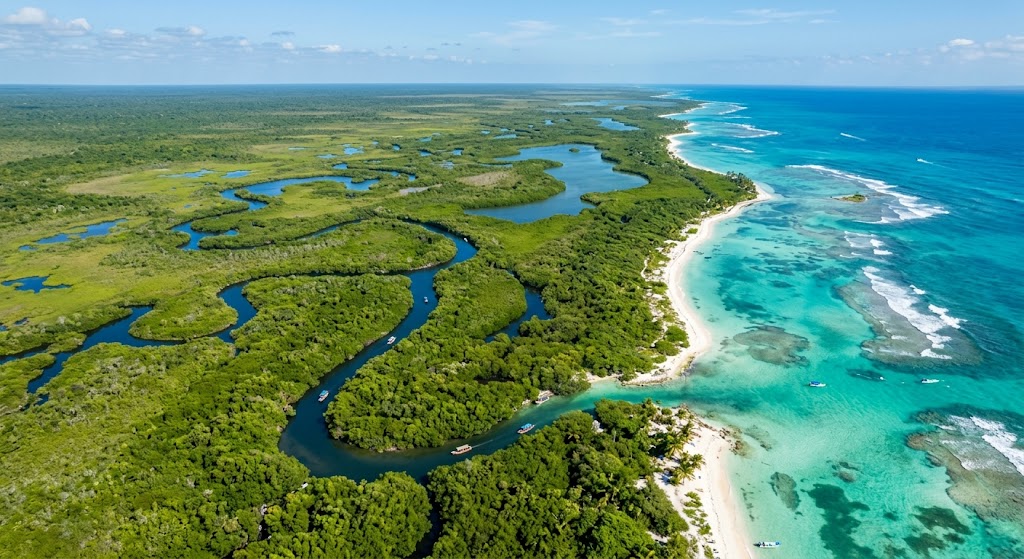
Sian Ka'an, whose Maya name poetically means 'Origin of the Sky', is one of Mexico's most spectacular natural treasures and a UNESCO World Heritage site. Located immediately south of Tulum, this vast biosphere reserve stretches across 528,000 hectares of flooded savannas, mangrove forests, and Caribbean coastline. Unlike the crowded beach resorts of the Riviera Maya, Sian Ka'an delivers an intimate encounter with pristine wilderness: dolphins glide beneath your boat, sea turtles surface nearby, and ancient Maya ruins emerge from vegetation reclaimed by the jungle.
High-end ecotourism is the backbone of Sian Ka'an's experience. Rather than solo exploration, visitors engage guided excursions ranging from 180 to 230 euros per person, including van transport from Tulum, boating, snorkel gear, and a meal. This premium structure exists to protect the reserve's fragile ecosystem while funding conservation efforts that keep Sian Ka'an pristine for future generations.
What to Expect on a Day Excursion
A typical Sian Ka'an experience unfolds in stages. Your guide meets you at your hotel in Tulum or Playa del Carmen early in the morning, then drives south along the coastal road. After 30–40 minutes, you arrive at the reserve's entrance, where your adventure transitions from road to water. The programme is carefully choreographed: first, a visit to the Muyil ruins, where ancient structures stand draped in vines and surrounded by towering trees. Afterwards, you board a small motorboat and drift slowly along the narrow canals dug by the Maya centuries ago, now forming a natural highway through the reserve.
These canals are the heart of Sian Ka'an's magic. Flanked by mangroves whose aerial roots dip into the water, the channels feel like navigating a liquid jungle. Your guide watches constantly for wildlife, pointing out birds perched in the canopy and fish moving through the crystalline water below. Every turn presents a new scene: a flamingo wading in the shallows, an osprey diving for fish, or the gentle ripple of a manatee surfaces. The pace is leisurely, allowing time to absorb the tranquility and biodiversity that defines this reserve.
The Muyil Ruins: A Walk Through Time
Muyil, also called Chunyaxché, is a pre-Columbian Maya settlement that flourished between 1200 BCE and 1500 CE. Unlike the grand ceremonial centres of Chichén Itzá or Tulum, Muyil is intimate and overgrown, its structures absorbed into the forest canopy. The main pyramid, known as El Castillo, rises modestly above the surrounding jungle, offering views across the reserve if you climb its steep stone steps. What makes Muyil extraordinary is precisely this lack of tourist infrastructure: you wander freely among structures in various states of preservation, reading the landscape like an open book of Maya civilization.
Your guide provides archaeological context as you explore: explaining the purpose of each plaza, decoding glyphic carvings on stelae, and describing the daily life of the Maya who once inhabited this place. The greenery-drowned setting creates an atmosphere of discovery and intimacy that polished archaeological sites cannot replicate. After your walk through Muyil, the contrast to the pristine waters of Sian Ka'an's canals feels profound—nature and culture, interwoven in a single place.
Marine Life & Snorkeling in the Reserve
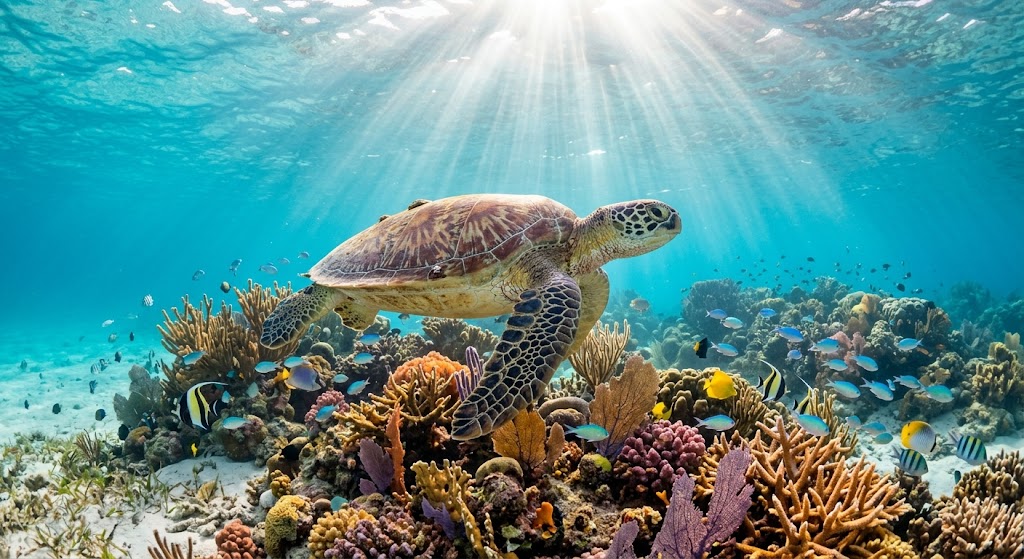
Sian Ka'an's waters support an extraordinary diversity of marine life. Dolphins frequent the canals and coastal lagoons; spotting them is almost guaranteed on calm-weather excursions. Sea turtles—loggerhead, hawksbill, and green turtles—nest on the reserve's protected beaches and feed in its shallow waters. Eagle rays glide through the deeper channels with balletic grace, their wing-like fins undulating as they hunt for molluscs in the sandy bottom. On exceptional days, manatees—slow, gentle marine mammals—surface to breathe, their presence a sign of Sian Ka'an's healthy ecosystem.
Most excursions include a snorkeling stop in one of the reserve's cenote-fed lagoons or coastal reefs, where visibility often exceeds 20 metres. The fish are abundant: parrotfish, snappers, groupers, and smaller reef species create a tapestry of colour. Snorkeling in Sian Ka'an differs from the crowded reef dives of Cozumel: you're floating in a protected sanctuary where marine life thrives undisturbed. Your guide enforces strict no-touch rules, reminds you not to use chemical sunscreen (which damages coral), and encourages respectful observation. This restraint—leaving the reserve untouched—is what keeps Sian Ka'an magical.
Planning Your Visit to Sian Ka'an
The best time to visit Sian Ka'an is during the dry season, from November to April, when skies are clearer, temperatures are moderate, and the water is calmest. Excursions run less frequently or not at all during hurricane season (June to November), when waters become rough and visibility drops. Book your tour through your hotel or directly with a reputable operator in Tulum at least one day in advance—places fill quickly, especially during high season.
Where to stay for your Sian Ka'an visit depends on your budget and style. Tulum itself offers everything from eco-lodges in the jungle to beachfront resorts and budget hostels. Many visitors base themselves in Tulum town and take the excursion as a day trip. Others choose to explore multiple attractions in the Riviera Maya, combining Sian Ka'an with visits to nearby cenotes, beaches, or archaeological sites. A typical itinerary pairs Sian Ka'an with Tulum's coastal ruins and nearby freshwater pools, creating a balanced blend of cultural and natural experiences.
Practical Tips for Sian Ka'an
Preparation ensures your Sian Ka'an experience is comfortable and respectful. Wear sturdy water shoes or sandals that won't slip on wet boat decks; bring reef-safe, mineral-based sunscreen only (or wear a rash guard); pack insect repellent for the early-morning and late-afternoon hours when mosquitoes are active; and bring a waterproof bag or dry bag for your camera and valuables. Most operators provide snorkel gear, but consider bringing your own if you prefer a familiar fit. Arrive at your meeting point rested and hydrated—your guide will do the rest.
Respect the reserve's rules: never touch marine animals, don't step on coral, and follow your guide's instructions regarding sensitive areas. Photography is permitted, but prioritize the experience over the shot; you'll remember the encounter with dolphins far longer than the photo. Finally, understand that Sian Ka'an is a living, functioning ecosystem with variable wildlife sightings. Even the best guides cannot guarantee specific animal encounters; the beauty lies in the unpredictability and the privilege of witnessing nature on its own terms.
Keep Exploring
If you're still planning this part of the trip, these guides pair well with it: Swimming with Turtles in Akumal: How to Do It Right, Swimming with Whale Sharks in Isla Holbox: Everything You Need to Know and The Complete Guide to Visiting Celestún and Its Flamingos.
FAQ
How long is a typical Sian Ka'an excursion?
Most full-day excursions last 6 to 8 hours, including hotel pickup and drop-off from Tulum or Playa del Carmen. Early-morning departures (around 7 a.m.) are standard to maximize daylight and wildlife sightings.
What's included in the 180–230 euros price?
Guided excursion with a professional naturalist, van transport, motorboat in the reserve, snorkel gear, a meal (often fresh seafood), and all park fees. Some operators include beverages; confirm details when booking.
Can I reach Sian Ka'an without a tour?
Officially, all visits to the reserve must be accompanied by an authorized guide. Individual exploration is not permitted to protect the ecosystem and ensure visitor safety. Booking through a tour operator is the only way to access Sian Ka'an.
Will I definitely see dolphins and manatees?
Dolphin sightings are very likely, especially in calm conditions. Manatees are rarer and depend on season and luck. Sea turtles are commonly spotted. Your guide will maximize sighting chances, but wildlife encounters are never 100% guaranteed—that's part of the natural experience.