Quick facts
- Ideal Season
- Mid-November to April (dry, 28–30°C)
- Best Sweet Spots
- November & February (great weather, fewer crowds)
- Avoid
- September–October (hurricane season, 35°C+)
- Peak Tourist Season
- March–April (US Spring Break & Semana Santa)
The Yucatan Peninsula's tropical climate follows a straightforward pattern: a dry season and a rainy season. Understanding these cycles is essential for choosing the right time to visit. Your choice will affect not just comfort and visibility underwater, but also prices and crowd levels. Let's break down what each season offers so you can plan the perfect Yucatan escape.
Dry Season: November to April
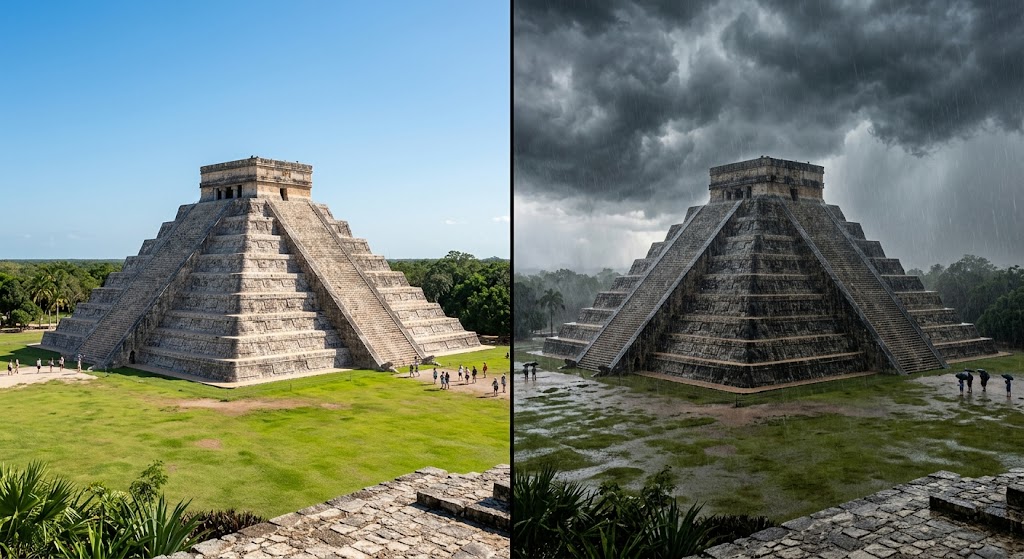
The dry season, running from mid-November to April, is the ideal period for most visitors. Temperatures hover around 28 to 30 degrees Celsius, with bearable humidity that makes exploring archaeological sites like Chichén Itzá or Coba pleasurable rather than punishing. The crystalline skies and calm seas mean superb underwater visibility—perfect for snorkeling at coral reefs and cenotes or visiting the islands of Cozumel and Isla Mujeres.
The trade-off? This is high season. Hotels, restaurants, and attractions are packed, especially during the US Spring Break (March) and Semana Santa (Holy Week). Prices peak, and popular spots can feel crowded. Booking accommodation well in advance is essential if you're traveling during these peak windows. Still, the weather is so reliable that many consider it worth the premium.
Rainy Season: May to October
From May to October, the peninsula enters its rainy season. Afternoons bring heavy downpours, though they usually pass within an hour, and mornings are often clear. The real challenge is heat and humidity: feels-like temperatures regularly exceed 35 degrees Celsius, making midday exploration exhausting. The sea becomes choppy, and underwater visibility drops—a significant drawback if cenote snorkeling or reef diving is a priority.
The final two months, September and October, carry an elevated risk of hurricanes and tropical storms. While modern building codes make hotels safe, travel disruptions are possible. However, the rainy season has perks: prices drop significantly, crowds thin out dramatically, and the landscape becomes lush and verdant. If you tolerate heat and don't mind indoor activities punctuated by storms, this is the budget traveler's golden window.
The Sweet Spots: November & February
If you can choose your dates freely, aim for November or February. These months combine near-perfect weather, excellent underwater visibility, and moderate crowds—the best of all worlds. November marks the immediate transition into the dry season when many tourists haven't yet arrived. February falls mid-season but benefits from the fact that US Spring Break hasn't begun. Both months offer temperatures around 28–30°C, pristine snorkeling conditions, and a relaxed atmosphere that lets you explore cenotes, Mayan temples, and beaches without fighting throngs.
These sweet spots are ideal if you're splitting the difference between comfort and cost, or if you simply want to experience the Yucatan at its most pleasant. Book your car rental and lodging a month or two in advance to secure good rates without paying peak-season premiums.
Planning by Season
Traveling in high season (December–April)? Expect crowds and higher prices, but enjoy flawless weather and the liveliest beach clubs and restaurants. Plan popular attractions at dawn to beat crowds.
Coming in shoulder season (November)? You hit the sweet spot: excellent weather, moderate tourism, and better value. This is when savvy travelers aim their calendars.
Considering the rainy season (May–October)? Embrace the heat, budget accordingly, and focus on indoor activities like museums, markets, and covered cenotes. Afternoon storms are predictable; plan accordingly.
Whatever you choose, the Yucatan rewards thoughtful planning. Know the climate patterns, and you'll craft a trip that matches your priorities—whether that's pristine beaches, archaeological wonder, or simple value for money.
Ready to Plan Your Yucatan Trip?
Find the perfect accommodation for every season
Explore Where to StayKeep Exploring
Want to go deeper? Check out Renting a Car in the Yucatán: The Anti-Scam Guide, Sargassum Seaweed in Mexico: When and Where to Avoid It and Top 10 Boutique Hotels in the Riviera Maya next.
FAQ
What is the single best month to visit the Yucatan?
November and February are generally considered the best months: they offer nearly perfect weather (around 28–30°C), excellent underwater visibility, reasonable prices, and far fewer crowds than March and April. If you can only choose one, November edges slightly ahead as it's right after the summer rains end and before the holiday rush.
Is it really dangerous to visit during hurricane season?
While September and October do carry elevated hurricane risk, modern hotels are built to withstand them. The real concern is potential flight disruptions or cancelled excursions. If you're flexible and traveling on a tight budget, the off-season crowds and prices may offset the weather risk—just monitor forecasts and have travel insurance.
How much hotter is the rainy season compared to the dry season?
In the rainy season, feels-like temperatures often exceed 35°C due to high humidity, while the dry season runs 28–30°C. That 5–7 degree difference, combined with afternoon downpours, significantly affects how comfortable exploration feels. Dry-season visitors can comfortably walk archaeological sites all day; rainy-season visitors usually rest during peak heat.
Why do prices spike in March and April if the dry season runs through April?
March coincides with US Spring Break, and April includes Semana Santa (Holy Week), which is a major vacation period across Latin America. Both events flood the Yucatan with tourists, driving up hotel rates and restaurant prices. January–February and November, though still in the dry season, see more moderate pricing because they fall outside these peak holiday windows.