Quick facts
- Best time
- May-August (avoid sargassum at coast)
- Budget
- 300-450 pesos per cenote plus transport
- Duration
- Half-day or full-day excursions
- Getting there
- From Tulum or Playa del Carmen
When summer heat and seasonal sargassum make Riviera Maya beaches less appealing, Tulum's network of cenotes offers a pristine alternative. These underwater sinkholes—sacred to the ancient Maya and geologically unique to the Yucatán Peninsula—deliver year-round freshwater swimming in dramatic settings. From sprawling open-air pools to mysterious underground rivers, cenotes near Tulum and Playa del Carmen represent some of Mexico's most spectacular natural attractions.
The cenotes near Tulum range from easily accessible day-trip destinations to remote, guide-required cave systems. Each offers distinct experiences: some reward the casual swimmer, others demand technical diving skills, and most simply invite contemplation in settings where time feels suspended between stone, water and jungle.
Cenote Azul: The Open-Air Paradise
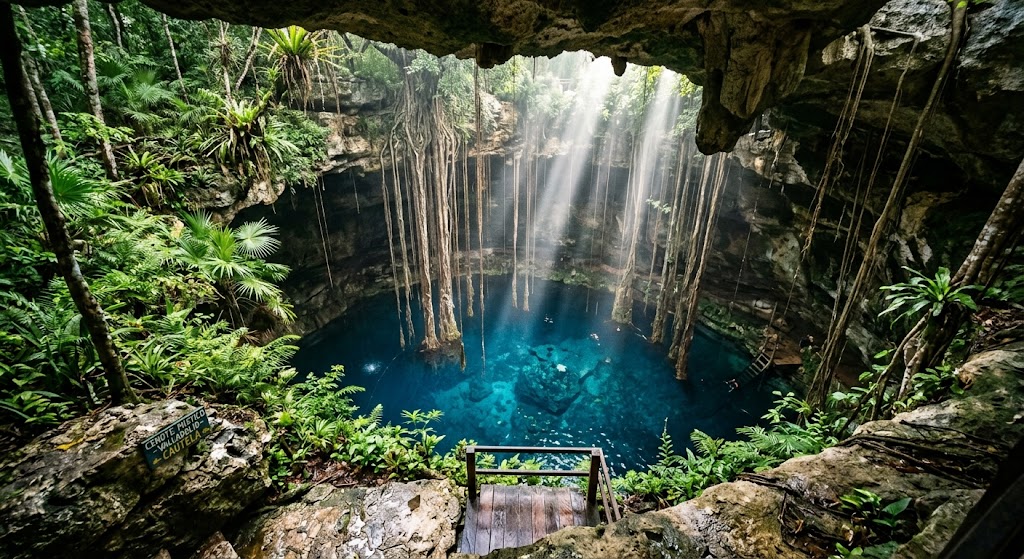
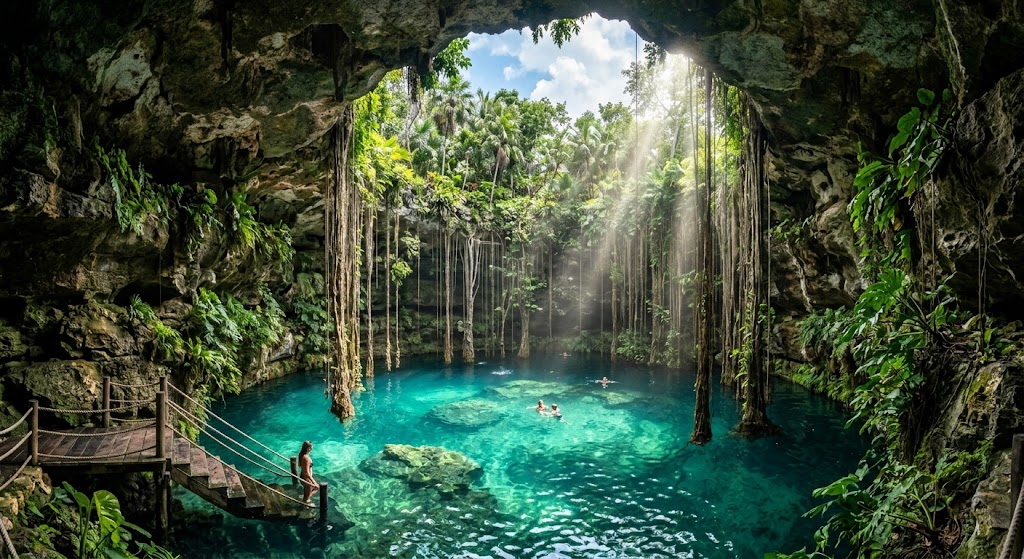
Cenote Azul, located near Playa del Carmen, represents the archetypal cenote experience. This vast, open-air natural pool stretches across a verdant clearing fringed by dense jungle vegetation, creating a sense of discovery despite being reasonably accessible. The cenote's striking turquoise water, fed by underground springs, maintains consistent coolness year-round—a refreshing counterpoint to the relentless Riviera Maya heat.
The site charges approximately 300 pesos for entry and offers basic facilities including shade structures, changing areas, and on-site refreshments. The shallow zones near the shoreline suit families and casual swimmers, while deeper sections toward the centre provide a proper swimming experience. Many visitors combine Cenote Azul with a stay in nearby Playa del Carmen or Tulum, making it an ideal half-day excursion from accommodation along the coast.
Intimate Underground Systems
Two cenotes near Tulum—Nicte-Ha and Taak Bi Ha—offer more intimate and mysterious experiences. Nicte-Ha, whose Maya name means 'water flower', features semi-open caverns where natural light filters through limestone openings, illuminating both the water surface and dramatic overhead formations. Taak Bi Ha charges around 350 pesos for entry and presents a smaller, more exclusive cenote experience favoured by those seeking respite from busier sites.
Both cenotes reward early arrivals with solitude and superior water clarity. A dedicated cenotes guide can help you identify the subtle differences between these systems, explaining the geological forces that carved them over millennia. Pack reef-safe sunscreen alternatives—mineral-based products only—as chemical sunscreens damage both the delicate ecosystem and your swimming experience.
Sac Actún: The Underground Marvel
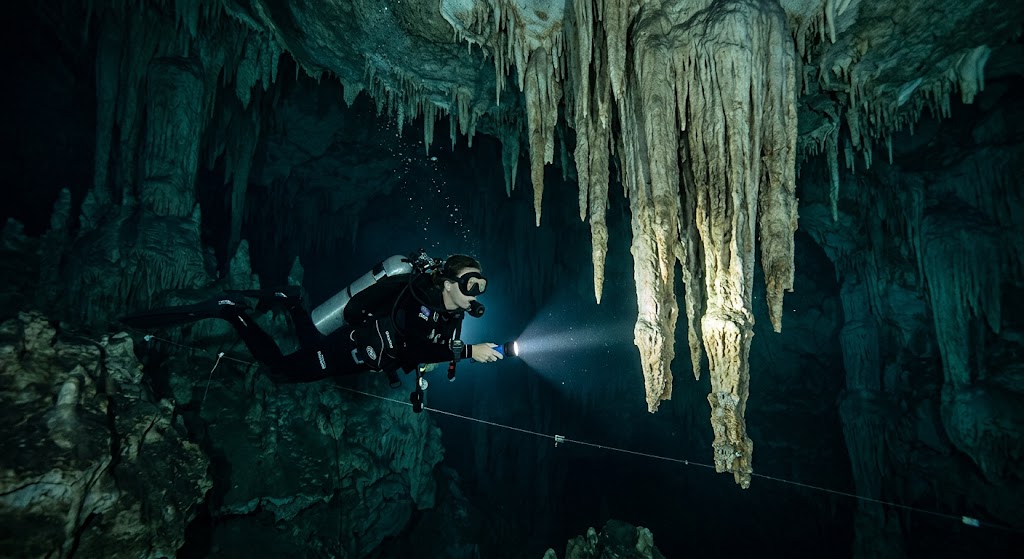
Sac Actún represents the monumental end of the cenote spectrum. This vast underground network sprawls beneath the jungle floor, its passages studded with thousands of stalactites and submerged formations that seem to defy geological probability. Entry costs approximately 450 pesos and includes essential snorkel gear; a compulsory guide navigates the sometimes-narrow passages through this subterranean wonderland.
The Sac Actún system demands respect. The guide is not optional—these passages can disorient even experienced swimmers—and the journey typically lasts 90 minutes to two hours. However, the otherworldly beauty of underground rivers, cathedral-like chambers, and the absolute silence of being suspended between stone and water creates a transformative experience. This is a bucket-list cenote comparable to other premium Riviera Maya experiences, rewarding advance booking and early departure from your accommodation.
Practical Guide & Etiquette
Cenote swimming demands environmental responsibility. Never use chemical sunscreen, insect repellent, or cosmetic products—even 'reef-safe' varieties. These damage the fragile underground ecosystems that took millions of years to develop. Shower or rinse off in provided facilities before entering the water, and avoid touching cave formations or standing on shallow-water bottoms where delicate life thrives. Most cenotes prohibit feeding fish and strictly forbid flash photography in certain zones.
Practical tips: arrive early to beat crowds and secure parking at smaller sites; bring water and snacks as remote cenotes have limited food options; and plan your day around mid-afternoon heat. If driving from a rental car base, allow extra time for navigation on smaller jungle roads. Many cenotes sit 30-60 minutes inland from the coast, so factor transport into your day planning. Professional guides available at major sites enhance understanding of both geology and Maya cultural significance.
Where to Stay
Tulum, Playa del Carmen, and Puerto Morelos all serve as bases for cenote exploration. Tulum offers a vibrant pueblo town centre with budget accommodation alongside coastal eco-resorts with upscale amenities. Playa del Carmen, the larger tourist hub, provides the widest hotel range and easiest access to car rental and shopping. Both cities lie within 30-45 minutes of the main cenotes featured here.
For those prioritising proximity to cenotes over coastal access, smaller towns like Akumal offer intimate accommodation options. Browse regional accommodation guides to identify properties with complimentary snorkel gear, poolside cabanas, or easy onward transport arrangements. Booking directly with smaller eco-lodges often yields advice on which cenotes suit your fitness level and travel timeline—invaluable when planning a successful water-based itinerary.
Plan Your Cenote Adventure
Find the perfect base for your underground water exploration
Browse Accommodation Near Tulum's CenotesKeep Exploring
FAQ
What's the best time to visit cenotes near Tulum?
May through August offer the clearest water and fewest crowds, as coastal sargassum drives visitors inland. November to February brings perfect weather but busier cenotes. Avoid September-October due to hurricane season and reduced visibility.
Do I need to bring my own snorkelling gear?
Cenote Azul, Nicte-Ha, and Taak Bi Ha allow personal gear but don't require it; basic equipment is available on-site. Sac Actún includes snorkel gear in the 450-peso entry fee. Bringing your own ensures proper fit and personal comfort.
Can I visit multiple cenotes in one day?
Yes. A full day typically accommodates two cenotes—perhaps Cenote Azul (near Playa del Carmen) in the morning and Taak Bi Ha (near Tulum) in the afternoon. Sac Actún's 90-minute guided tour works best as a standalone half-day activity.
Are cenotes safe for children and weak swimmers?
Cenote Azul's shallow zones suit families perfectly. Nicte-Ha and Taak Bi Ha have shallow entry areas but deep sections requiring supervision. Sac Actún requires swimming competency and is compulsory-guide only. Always supervise children and consider life vests at deeper cenotes.